Coaching Beyond the Scoreboard: The Lesson That Changed Everything
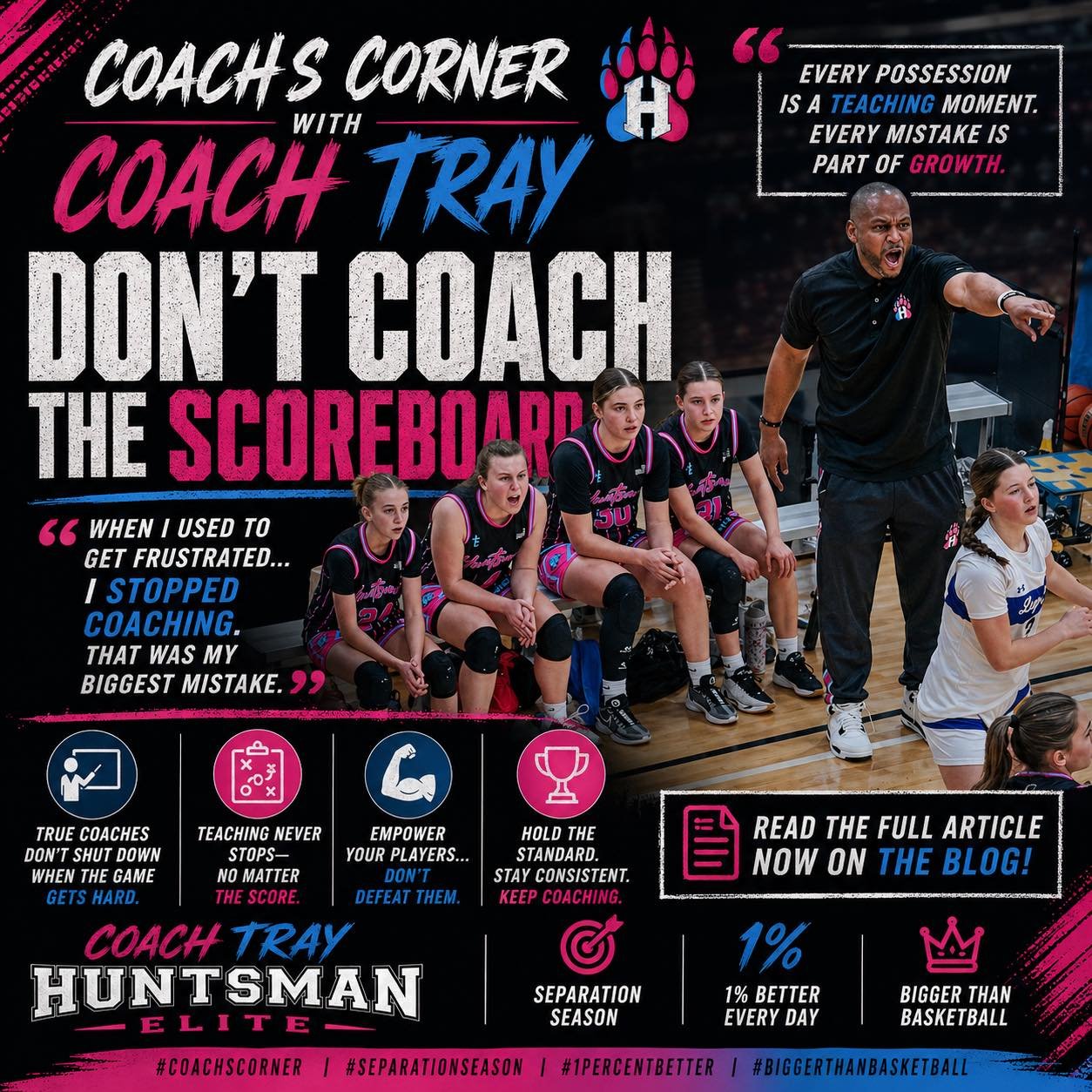
When the scoreboard controlled me
There was a time in my coaching journey when I let the scoreboard control me.
I didn’t realize it in the moment—but looking back, it’s clear as day. If the game started slipping away… if we got down big… if things didn’t go how I envisioned—they didn’t just frustrate me… they changed me.
And not for the better.
Instead of coaching, I reacted.
Instead of teaching, I shut down.
Sometimes it turned into yelling. Other times, I’d sit down, arms crossed, frustrated, already mentally checked out. The game wasn’t over—but in my mind, it was.
And that’s the truth a lot of coaches won’t say out loud.
The silent mistake many coaches make
Here’s the reality: a lot of coaches have been there.
You invest time. You pour into your players. You want to win—not just for yourself, but for them. So when things fall apart, emotions take over.
But here’s what I had to learn the hard way:
When you stop coaching because the game feels out of reach—you’re not just losing the game… you’re losing the moment.
And moments are where development lives.
Players don’t just need you when things are going well.
They need you even more when everything is going wrong.
That’s when real coaching begins.
The shift: from reacting to teaching
As I’ve grown—not just as a coach, but as a man—I’ve realized something powerful:
True coaches are educators.
We are teachers first.
That means:
We correct in real time
We teach through mistakes
We reinforce standards no matter the score
The scoreboard should never dictate your effort as a coach.
Because your job isn’t to coach the score.
Your job is to coach the player.
Perception matters—but purpose matters more
When a coach shuts down, players see it.
They may not say anything—but they feel it.
It sends a message:
“Coach gave up on us.”
“We’re not worth the effort right now.”
“When things get hard… we fold.”
And whether we mean to or not—that becomes part of the culture.
But great coaches? They flip that.
They stay engaged.
They keep teaching.
They demand effort and accountability until the final buzzer.
Because they understand:
Every possession is a teaching opportunity.
Every mistake is a lesson.
Every game—win or lose—is part of the process.
Empowerment over defeat
Now don’t get it twisted…
I’m still an old-school coach.
I’m going to challenge you.
I’m going to hold you accountable.
I’m going to push you to be tougher—mentally, physically, emotionally.
You’re not getting babied over here.
But there’s a difference between challenging players and deflating them.
Great coaching builds players up—even while correcting them.
It creates confidence through accountability—not fear through frustration.
The standard moving forward
The biggest lesson I’ve learned is this:
You can’t coach to the scoreboard.
If you do, your energy rises and falls with the game… and your players feel every bit of it.
But when you coach to a standard:
Effort stays consistent
Teaching never stops
Players continue to grow—regardless of the score
That’s how you build something real.
That’s how you build culture.
That’s how you separate from the pack.
Final thought
At no point—no matter the score—should you ever give up on your team.
Because the moment you stop teaching…
the moment you stop leading…
the moment you let frustration take over…
That’s the moment you stop being a coach.
And the best coaches?
They never stop coaching.
– Coach Tray
Separation Season. 1% Better Every Day. Bigger Than Basketball.